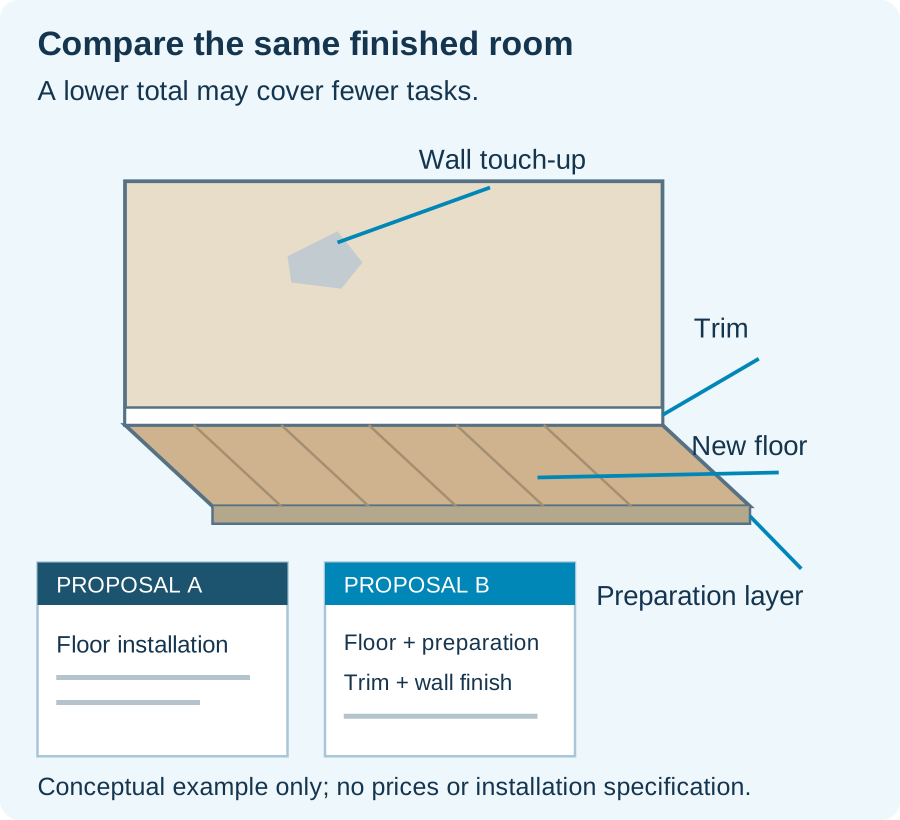
Two contractor quotes can describe the same room and still cover different jobs. Before you compare the totals, make the work itself comparable: what gets removed, what gets installed, what happens around it, and who handles each unfinished detail.
This is a practical way to organize your questions, not a price calculator or a substitute for reviewing the contract. You’ll end with a clearer comparison sheet and a short list of answers to get in writing.
Start by describing one project
Write a short description that every bidder receives, including the rooms, existing conditions, and the result you want. Add photographs and product details you already know, without presenting your rough measurements as final installation dimensions.
For example, “replace the kitchen floor” leaves several decisions open. State whether the cabinets stay, whether the existing surface must come out, and whether adjoining rooms or transitions are part of the requested work.
Separate what you’ve decided from what you want advice about. If you haven’t chosen the finish, say that clearly rather than giving one contractor a product name and asking another to guess at a similar option.
Keep the same starting brief when a new idea comes up during a site visit. Send the revised request to every bidder you still want to compare, so an appealing suggestion doesn’t quietly turn into a different scope.
Build a comparison sheet before ranking the totals
Use a separate column for each quote and a row for each part of your project. Copy the contractor’s wording first, then mark anything you can’t place without making an assumption.
A blank cell means you need an answer; it doesn’t mean the work is free or included elsewhere. Ask which line covers that task and what the contractor expects you to arrange yourself.
The FTC recommends multiple written estimates and asking about a large difference between them instead of automatically choosing the lowest bidder. Your comparison sheet makes that question specific enough to answer.
Use the same units where the quotes allow it, but don’t invent a unit price from an unclear total. Ask whether a listed amount covers a product alone, the installed result, or only one stage of the job.
| Scope item | What to ask | Record the answer |
|---|---|---|
| Removal | What comes out, and where does it go? | Included tasks and disposal responsibility |
| New work | Which product, quantity, and installation are specified? | Exact written description |
| Finishing | Who restores trim, paint, and adjacent surfaces? | Included, excluded, or unresolved |
| Unknown conditions | What happens if concealed damage is found? | Notification and approval process |
Separate selections, allowances, and exclusions
Highlight every term that leaves a choice or amount unsettled, such as an allowance, an owner-supplied item, or a task marked excluded. Ask what that wording means in this particular proposal rather than assuming all contractors use it identically.
For a fixture allowance, ask which selection it is intended to cover and what happens if your final choice differs. Also ask whether installation, delivery, accessories, and applicable taxes are described elsewhere or remain outside that amount.
Keep an owner-purchased item on your sheet even when it isn’t part of the contractor’s total. You still need to understand who confirms compatibility, receives the delivery, and handles a missing or damaged part.
For exclusions, describe the practical result in plain language. “Painting excluded” might mean you need a separate arrangement before the room looks finished, so it belongs in your overall plan rather than in a footnote you skip.
Look at the connections between trades
Walk through the project from beginning to end and look for handoffs. If a cabinet moves, ask who handles any affected plumbing, electrical work, wall repair, and finish work rather than treating those as automatic parts of cabinet installation.
A useful question is, “What will this area look like when your stated work is complete?” It encourages an explanation of the actual endpoint, including the tasks that another person may still need to finish.
Ask who schedules each handoff and how the sequence affects your use of the room. A proposal that looks simpler on paper may depend on you coordinating another trade before the first contractor can return.
Record site access, material storage, and protection of the areas that stay in use. These details help you compare disruption and responsibilities without pretending you can turn every inconvenience into an accurate dollar amount.
Think about a bathroom that will be unavailable during work, or a kitchen where you still need to prepare meals. Ask how the contractor describes access and daily cleanup, then decide which arrangements you need to make outside the contract.
If one proposal offers a shorter schedule, ask what that schedule assumes about material delivery and your selections. You can compare the assumptions without treating an optimistic target as a guaranteed completion date.
Keep your own availability on the same planning sheet. A visit needed for an inspection, delivery, or decision can affect you even when it doesn’t appear as a separate charge on the proposal.
Decide how unanswered conditions will be handled
Existing walls and floors can hide conditions a visual visit doesn’t settle. Ask which assumptions the proposal uses and what information the contractor needs before confirming the next step.
Discuss the change process before there is a change to approve. Ask who describes additional work, how the proposed price and schedule will be communicated, and when your written approval is needed.
The Iowa Attorney General’s consumer guidance identifies scope, permits, cleanup, timing, and a change-order process as important written details. Use those subjects to shape your questions, while checking the rules that apply where your project is located.
Keep a separate line for your own planning reserve instead of silently adding it to one contractor’s quote. A personal budget cushion and an agreed contract price answer different questions, and combining them makes the comparison harder to follow.
Check the business and the written commitments
Compare the business name on the proposal with the name that would appear on your agreement. In Florida, DBPR provides a license-verification route and a contact for questions about whether a service requires licensing.
Get the relevant insurance, permit responsibility, and warranty information directly rather than relying on a badge in an advertisement. Ask who is making a promise and which document describes its conditions.
The California contractor board’s contract guide illustrates why product details, cleanup, permit responsibility, and written warranties need clear language. Its legal requirements are California-specific; don’t treat its deposit limits or thresholds as Florida rules.
Read a financing offer separately from the work description if one is proposed. A payment amount is not the same thing as the project total, and unclear terms deserve a direct explanation before you agree.
Ask for a revised quote, then make the decision
Send each bidder a short list of unresolved items instead of a vague request to “match” another price. Ask for an updated written proposal that clearly includes, excludes, or defines each item.
Save the dated version you compare and keep later revisions separate. If a contractor answers an important question by email, make sure the final agreement reflects that answer rather than assuming the earlier message settled everything.
You may still choose a proposal that isn’t the lowest total because its scope, communication, or timing fits your needs better. The point is to make that choice with the differences visible instead of discovering them after work begins.
If the remaining terms affect legal rights or a large commitment you don’t understand, get appropriate independent advice before signing. A clear comparison is a decision aid, not a guarantee of workmanship or a replacement for professional contract review.